Research highlights

Science in Focus

A selection of findings from our research, explained in plain language. These are curated highlights, not the complete publication record.

Explore All Publications

Geophys. Res. Lett. 47 (2020)

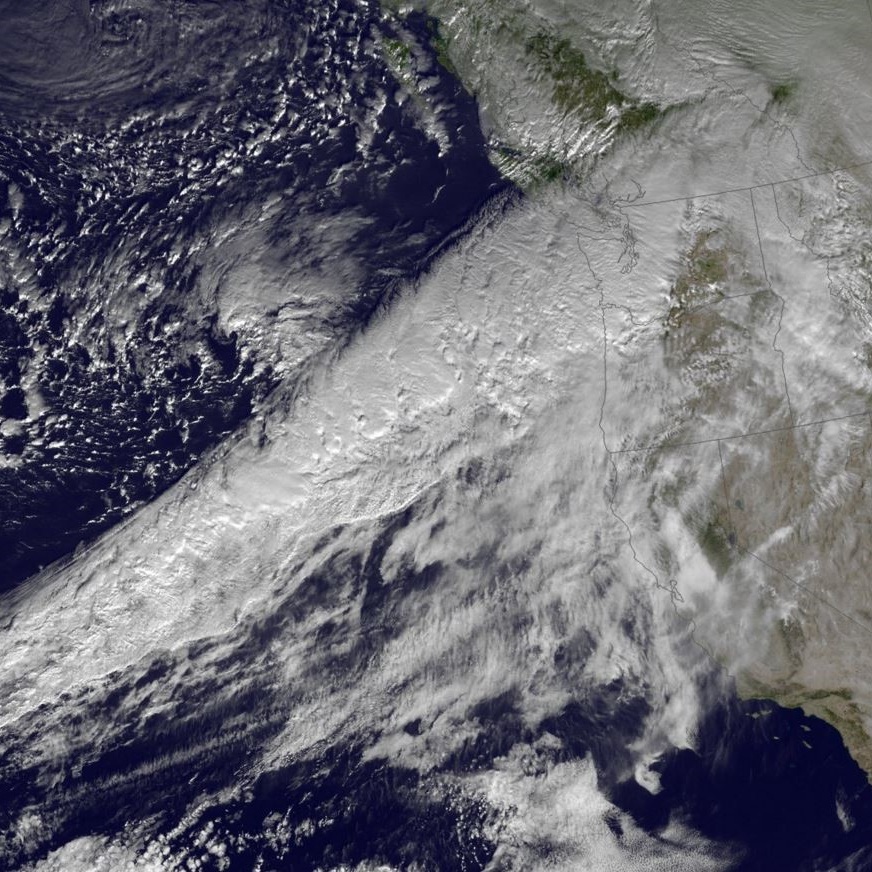
Warmer Sea Surfaces Intensify Landfalling Atmospheric Rivers

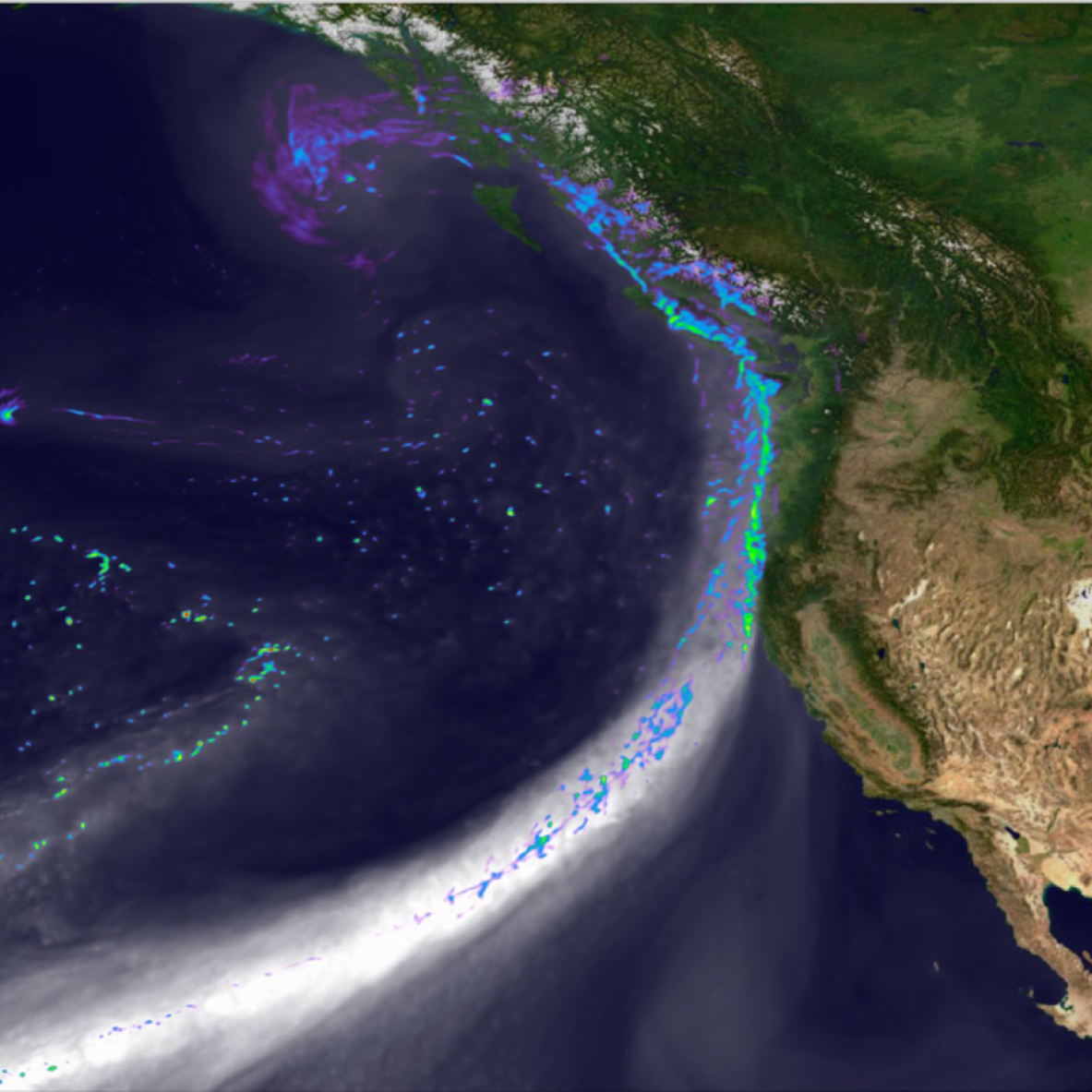
Warmer coastal ocean temperatures strengthen landfalling atmospheric rivers along the U.S. West Coast, increasing their frequency, intensity, and spatial extent. Numerical experiments show that AR-related extreme precipitation increases by approximately 3% per degree of ocean warming, highlighting the influence of local sea surface temperatures on regional rainfall extremes.

See DOE highlight, PNNL highlight

Geophys. Res. Lett., 46 (2019)

Atmospheric Rivers Trigger Heavy Snowmelt in the Western United States

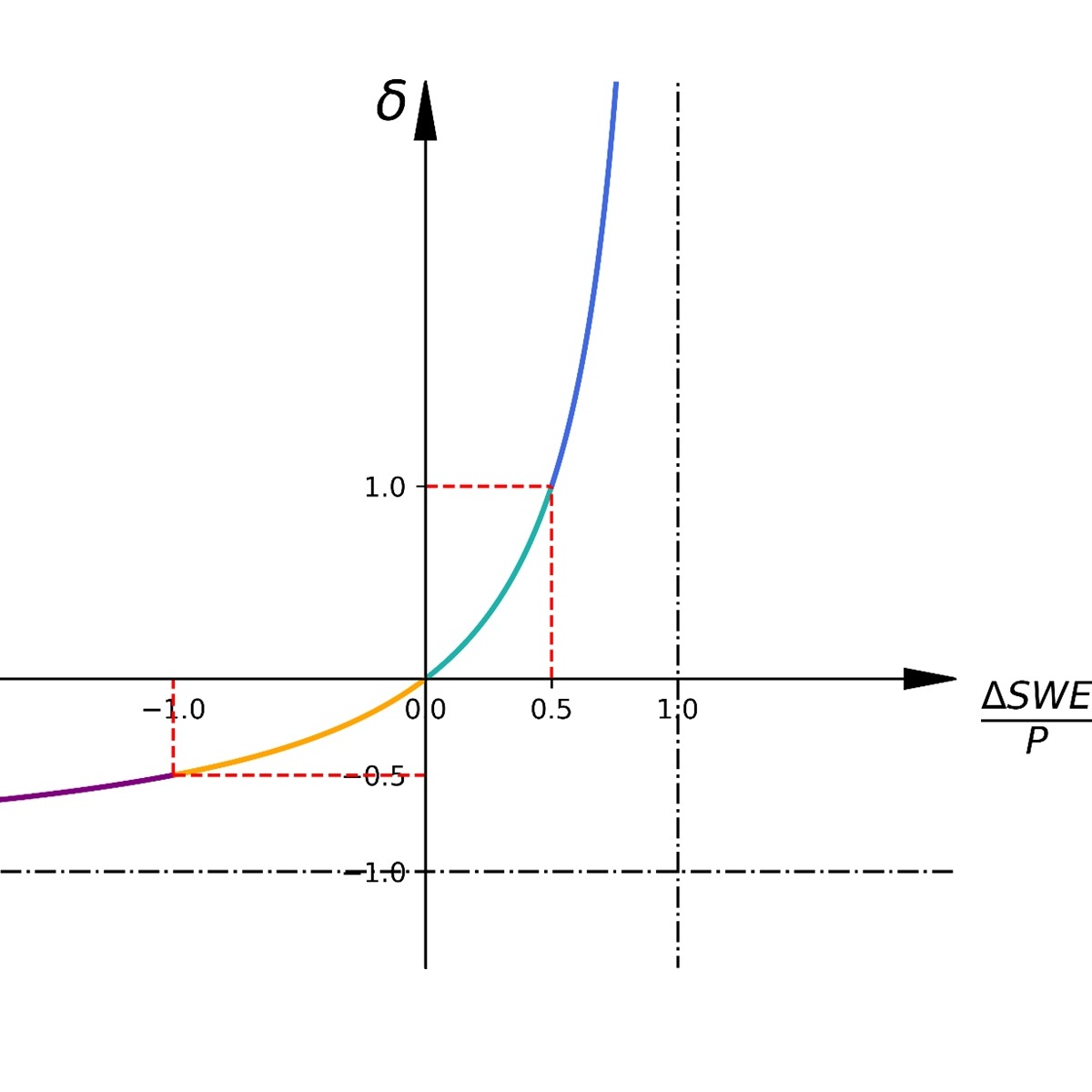
A new precipitation-and-snow (PAS) framework identifies five event types, revealing that 50–90% of rainfall events involve snowpack changes across the western U.S. Snow accumulation is widespread, while melting is more common in coastal mountains, where relatively rare atmospheric rivers can drive substantial snowmelt during heavy rainfall.

See Featured in AGU EOS by Valeriy Ivanov, DOE highlight

J. Geophys. Res.: Atmos., 124 (2019)

Tracing the Impact of Atmospheric Rivers on Land

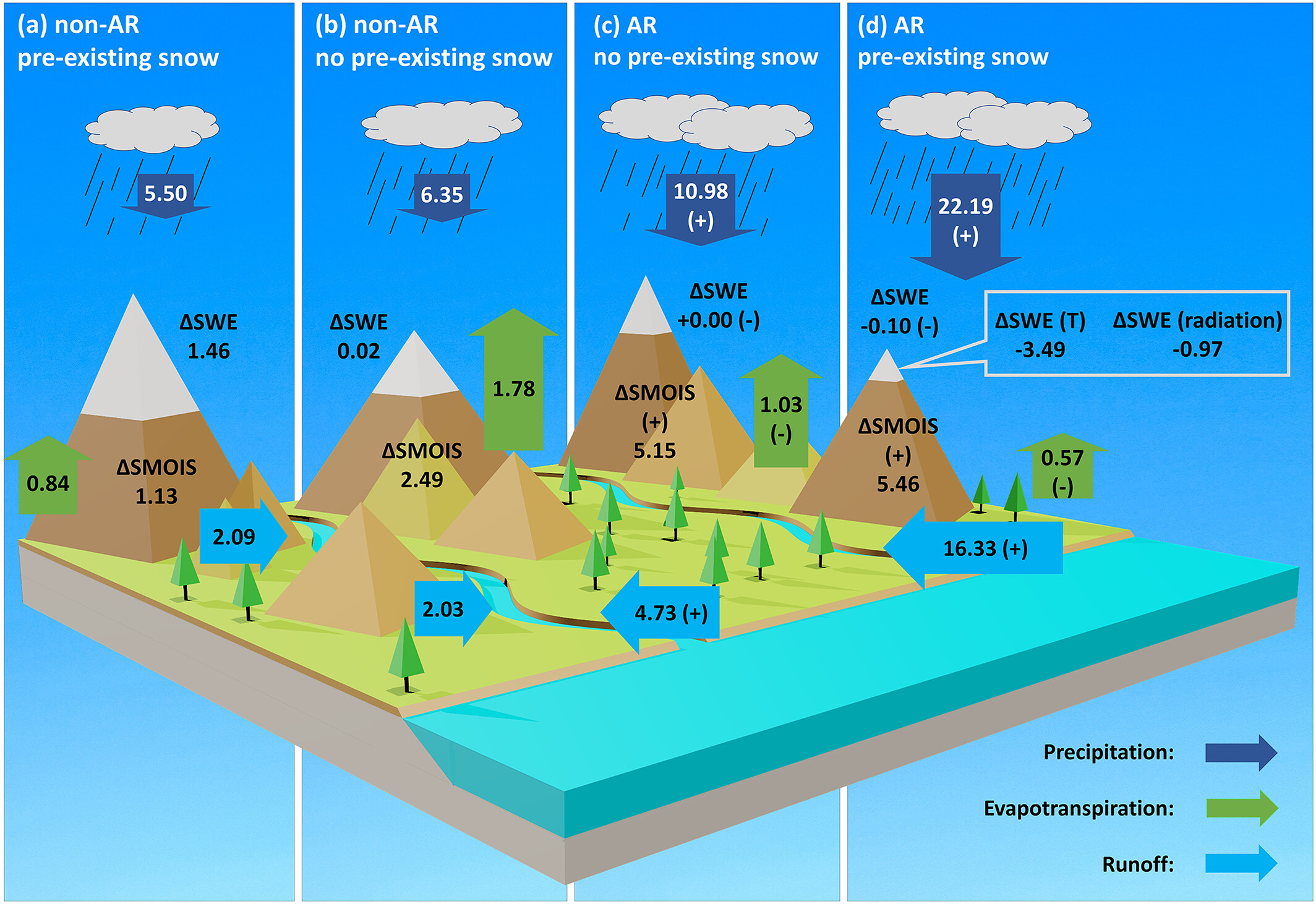
Atmospheric rivers reshape western U.S. watershed hydrology by bringing heavy precipitation, reducing evaporation, and accelerating snowmelt through warmer temperatures and increased radiative heating. In some watersheds, they double runoff and account for 30–60% of annual streamflow variations, amplifying seasonal contrasts in regional water availability.

See Featured in AGU EOS by Minghua Zhang, DOE highlight, PNNL highlight

Geophys. Res. Lett., 45 (2018)

Bracing for an Atmospheric River — and a Sea of Rain

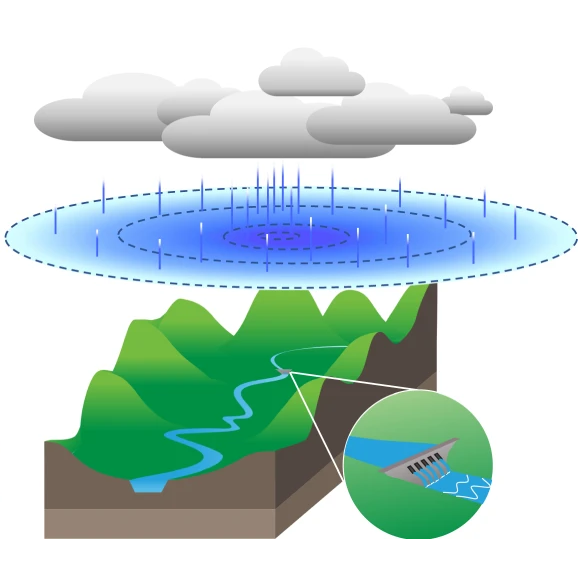
Atmospheric river occurrence, intensity, and duration help predict extreme precipitation in western U.S. watersheds at daily and monthly timescales. Machine-learning analysis highlights the importance of intense, long-lasting events, with stronger atmospheric rivers generally associated with heavier precipitation.

See DOE highlight

Explore All Publications