The question
Winter storms in the western U.S. cause billions of dollars in damages. How will the precipitation they deliver — and how it is distributed within each storm — change as the climate warms?
Key findings
- By mid-century, the strongest winter storms could bring up to 40% more precipitation.
- The increase is not uniform: more precipitation falls near the storm centers, so storms become spatially “sharper”.
- If these structural changes are not accounted for, infrastructure planning could misjudge future storm risks.
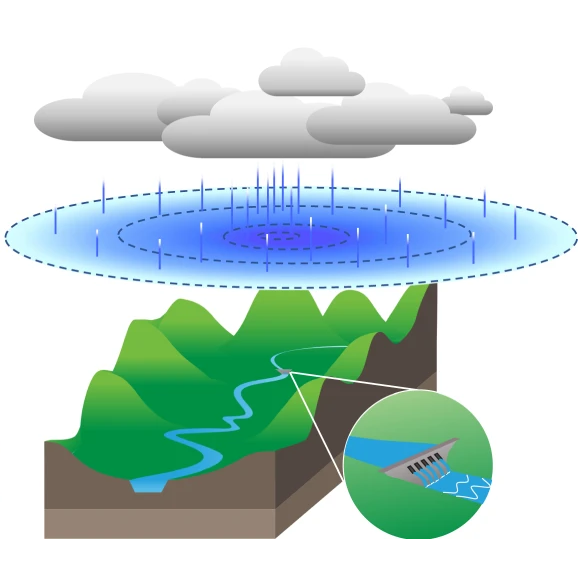
Engineers size dams, spillways, and drainage systems using the precipitation a storm deposits over a watershed. That depends not only on how much falls in total, but also on how it is distributed in space and time. This study looked at both, treating each cold-season storm as an object with its own footprint and internal structure.